
How do porta potties work on the inside?
Underneath the seat sits a holding tank, and that tank is the entire mechanism. There is no flushing water pulled from a line and no pipe running anywhere. When someone uses the unit, waste drops straight into the tank, where a blue deodorizing chemical breaks down solids and knocks back odor between service visits. A vent stack built into the back of the unit lets gas escape upward instead of sitting inside the cabin. A standard porta potty rental in West Hartford runs about 44 by 48 inches on the ground and stands roughly 92 inches tall, so it fits driveways, parking strips, and tight job sites without much fuss. Service techs pump the tank on their route, rinse it, and recharge the chemical before moving to the next stop. If you are picturing a construction worker running to a porta-potty between pours, that is exactly the load these tanks are built for: frequent, fast use, no water needed. For anyone comparing daily rates against a longer rental, the porta potty rental cost page breaks down what changes the price.
How do flushable porta potties work?
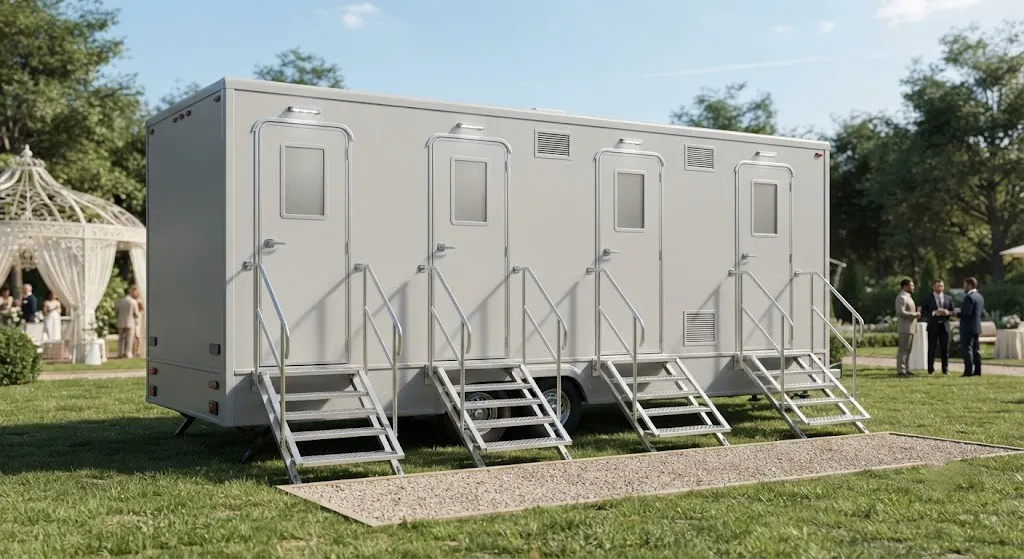
A deluxe or flushable unit adds a small onboard fresh-water reservoir and a hand pump or foot pedal that pushes a rinse of water into the bowl after use, which clears the bowl the way a low-flow toilet would. The waste still drops into the same style of sealed holding tank underneath, so nothing sprays out and there is still no line connected to city sewer. Restroom trailers take this further: a restroom trailer rental in West Hartford runs on a built-in freshwater tank and holding tank, plumbed sinks, and sometimes a small water heater, closer to a real bathroom than a job-site unit. A deluxe flushable porta potty sits between the two, good for weddings and small events where guests expect a flush handle. For anything with real foot traffic, from a backyard wedding to a multi-day festival, the event restroom rental options scale up unit count instead of asking one unit to do too much work.
How does a portable sink work?
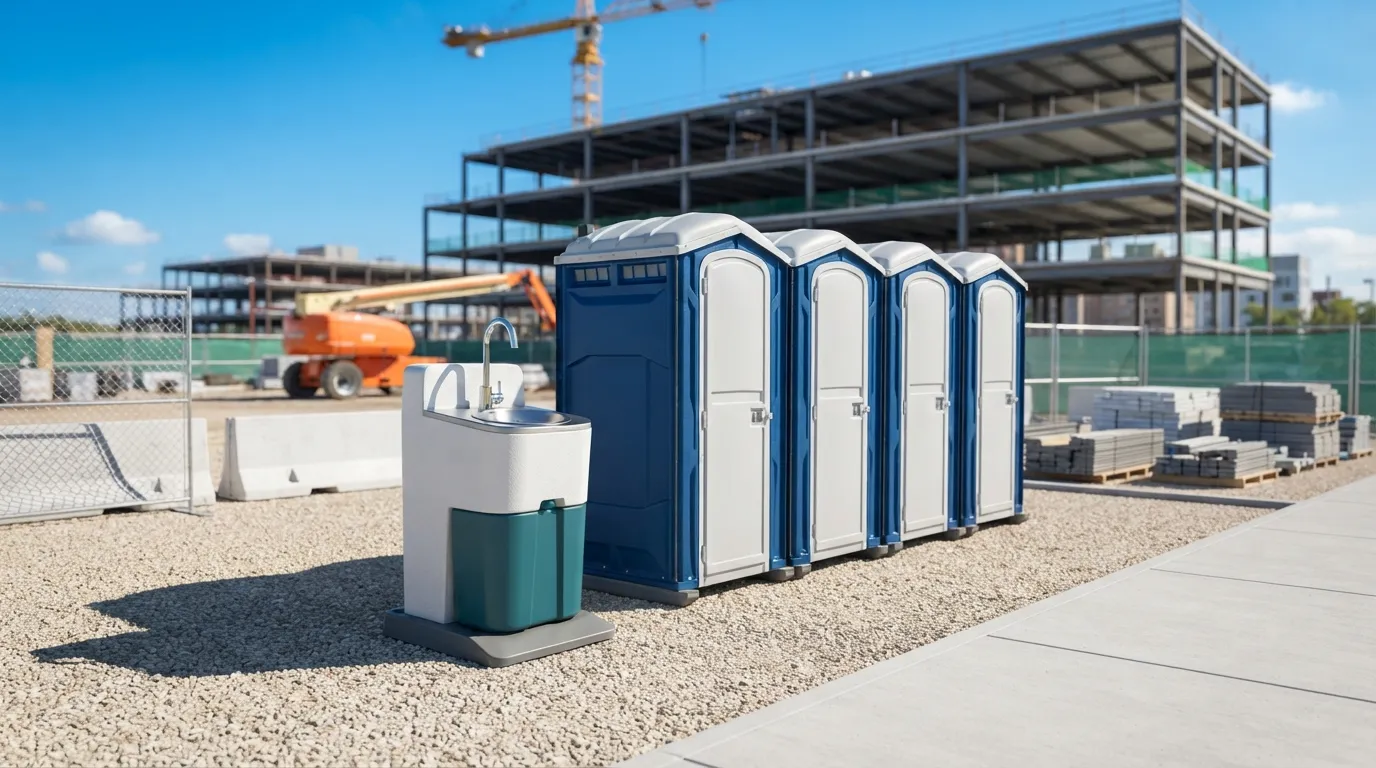
A portable sink runs on the same no-hookup logic as a porta potty: a fresh-water tank up top gravity-feeds or pump-feeds the faucet, a foot pedal or hand lever controls the flow, and gray water drains into a sealed tank underneath instead of a drain line. Soap dispenses from a built-in reservoir. Per 29 CFR 1910.141(d)(2), washing facilities need soap and towels or a hand-drying device, and hand sanitizer alone does not satisfy that. That is why a handwashing station rental or a portable sink rental matters on any site where OSHA 1926.51(f)(1) applies, meaning workers are applying paints, coatings, herbicides, or insecticides and need real washing, not just gel. Crews doing that kind of work in West Hartford should check the handwashing requirements page before assuming a sanitizer stand covers the obligation. General water supply is separate: OSHA 1926.51(a)(1) requires an adequate supply of potable water at any place of employment, porta potties or not.
Why do porta potties need chemical treatment and service?
Without regular chemical treatment, a tank builds up solids fast and starts to smell within days, especially in warm weather. The chemical breaks down waste and suppresses odor between pump-outs, and the ANSI/PSAI Z4.3 sanitation standard sets one service visit per week for up to 10 users over a 40-hour week as the baseline interval, more often for higher traffic. Septic systems follow the same logic at a bigger scale. A residential septic tank is typically pumped every 3 to 5 years depending on tank size and household size, and a grease interceptor gets pumped once fats, oils, grease, and solids reach 25 percent of the liquid depth. West Hartford homeowners asking about septic tank cleaning chemicals should know that additives are not a substitute for pumping; they help maintain flow, but a full septic pumping service or septic tank cleaning visit is still what clears solids out. If you are unsure how often your system needs attention, the how often to pump a septic tank guide walks through the size and usage factors. For toilet counts on an active job site, OSHA 1926.51(c) sets ratios starting at one facility per 20 workers, and the OSHA portable toilet requirements page covers the full table. Camping porta potties work the same tank-and-chemical way, just sized down, which is why the camping porta potty option and the porta john rental option share the same core mechanics as a job-site unit.
How often are porta potties cleaned?
Weekly is the baseline under the ANSI/PSAI Z4.3 standard for up to 10 users over a 40-hour week. High-traffic events or large crews need more frequent service. See how often are porta potties cleaned for the full breakdown by use case.
Do porta potties smell?
Some odor is normal, especially in heat, but a well-serviced unit with fresh chemical should not smell strongly. Poor ventilation or missed service visits are the usual causes. The do porta potties smell page covers what controls it.
How many porta potties do I need for a job site?
It depends on crew size and duration, following OSHA 1926.51(c) ratios starting at one unit per 20 workers. Longer projects and larger crews need more units or more frequent service. Full guidance is on how many porta potties do I need.
Are ADA-accessible porta potties different inside?
Yes. ADA units include a wider door opening, a 60 inch turning circle per ADA Standards 304.3.1, and grab bars, built to accommodate a wheelchair. ADA Standards 213.2 requires at least one accessible unit in any cluster. Details are on ADA accessible porta potty.
What is the difference between a porta potty and a restroom trailer?
A porta potty is a self-contained single unit with no plumbing. A restroom trailer has flush toilets, sinks, and sometimes climate control, closer to a building restroom. Compare options on restroom trailer rental or check restroom trailer rental cost for pricing context.
Next step
Get a delivery date
Tell us the address, the dates and the headcount. We size the order and confirm the route.