How fast can you get sanitation to a disaster site in West Hartford?
Emergency dispatch is what separates disaster response from a normal rental order. When a water main breaks or a storm takes out septic service for a block, you don't have three days to wait on a delivery window. We treat emergency porta potty rental requests as same-day priority, pulling from stock already staged for construction site services and event work around West Hartford.
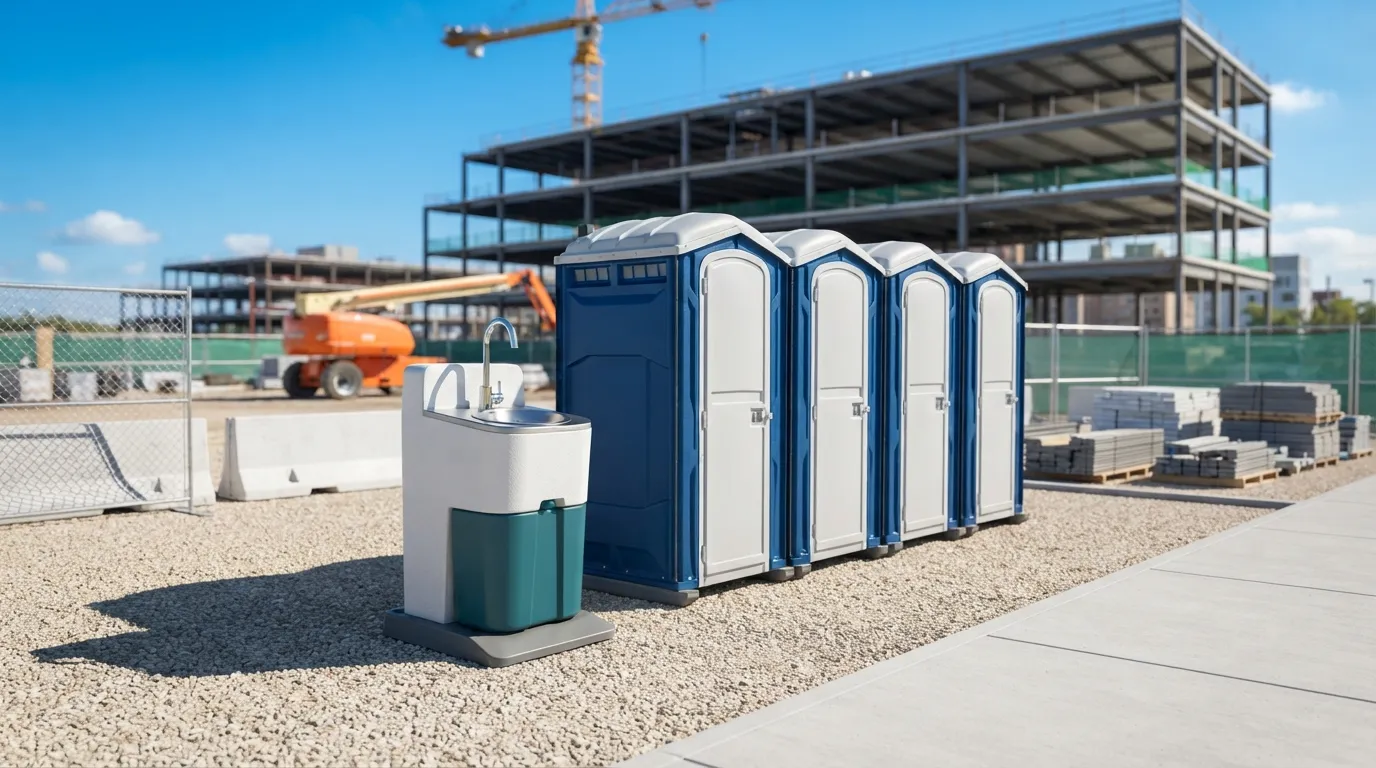
Most emergency placements use standard porta potty rental units, which hold 60 to 70 gallons in the tank and stand about 92 inches tall on a footprint of roughly 44 by 48 inches. That size fits driveways, parking lots and staging areas without heavy equipment. If the disruption hits a facility with employees on site, OSHA 1926.51(c)(1) sets toilet counts by headcount: one facility for 20 workers or fewer, then additional fixtures as crews scale past that. We size the order to match, and you can check ratios yourself on the how many porta potties do I need guide.
Displaced households and shelters need water too. OSHA 1926.51(a)(1) requires an adequate supply of potable water at any place of employment, and the same logic applies to relief sites housing volunteers or crews. A handwashing station rental or portable sink rental pairs with the toilets so people have both in one delivery.
What happens when a septic system fails during a flood or storm?
A failed septic system during a flood needs pumping and temporary toilets at the same time, not one after the other. Flooded drain fields back up fast, and a tank that would normally go 3 to 5 years between pumpings can fail overnight when groundwater floods the leach field. Our septic pumping service handles the emergency pump-out while holding tank rental units cover the household until the system dries out and gets inspected.
Watch for the same signs covered on our septic tank warning signs page: standing water over the tank, slow drains, sewage odor near the yard. If those show up after heavy rain in West Hartford, don't wait. Call our emergency septic service line rather than running water through a system that's already overwhelmed.
Restaurants and shelters serving hot meals also generate grease. A grease interceptor needs pumping once fats, oils, grease and solids reach 25 percent of the liquid depth, and a disaster kitchen running extra volume can hit that mark faster than usual. Grease trap pumping keeps a temporary kitchen from backing up mid-crisis.
For debris left behind by wind or flood damage, a roll-off dumpster rental clears it fast. OSHA 1926.25 requires scrap and debris to be cleared from work areas, and that housekeeping rule matters just as much on a storm cleanup as a job site. Crews should also check what cannot go in a dumpster before loading storm debris, since some material needs separate disposal.
Where do accessible units and lighting fit into a relief site?
Accessible units belong in a relief site plan from the start, not added after complaints. ADA Standards section 213.2 requires that where single-user portable units are clustered, at least 5 percent, and never fewer than one unit, must be accessible. An ADA accessible porta potty meets the 60 inch turning circle called for under section 304.3.1 and the 32 inch clear door opening under section 404.2.3, so wheelchair users aren't stuck at a shelter with no usable restroom.
Relief sites running overnight need light. OSHA 1926.56(a) sets minimum illumination levels for construction areas, and the same fixtures work for a disaster staging yard. A light tower rental covers a parking lot or debris drop point after dark, and a temporary power pole can run pumps, lights and radios where the grid is down.
Security matters too. Temporary fence rental or crowd control barrier rental built to OSHA 1926.202 barricade standards keeps volunteers and residents away from flooded basements, downed lines and staging equipment. If West Hartford crews need overflow gear storage, a storage container rental or mobile office trailer rental gives responders a dry, lockable base near the site. Bristol sits 13.0 miles southwest and Glastonbury 13.8 miles southeast, both within range if a West Hartford yard runs short and units need to move between towns fast.
How much does emergency sanitation cost during a disaster?
Emergency rates run close to standard daily pricing, not a premium markup. A standard unit typically runs $100 to $350 a day, and an ADA unit runs $200 to $400 a day. Delivery fees for urgent dispatch land between $100 and $500. Full detail is on the porta potty rental cost page.
| item | day rate |
|---|---|
| standard unit | $100 - $350 |
| ADA unit | $200 - $400 |
| delivery fee | $100 - $500 |
Do you deliver disaster relief sanitation outside West Hartford?
Yes. We already serve towns measured out from West Hartford, including Southington at 14.3 miles southwest and Meriden at 20.1 miles south. Check service areas for full coverage, or request dispatch directly through request a quote.
Can shelters get handwashing stations without running water?
Yes. A hand sanitizer station rental works where there's no water line at all, but 29 CFR 1910.141(d)(2) requires soap and towels or a hand-drying device at a real washing facility, and sanitizer alone doesn't satisfy that standard. Shelters with a kitchen or medical station should pair both.
What if debris contains chemical residue or contaminated material?
OSHA 1926.51(f)(1) requires washing facilities specifically where workers apply paints, coatings, herbicides or insecticides, or handle other contaminants. Storm debris with chemical spillage falls under that rule, so a rinse station belongs at the debris sort point, not just the crew break area.
How long can we keep emergency units on site?
As long as needed. Disaster rentals often stretch past the first week, and switching to a monthly porta potty rental rate usually costs less per day than repeated short-term orders once recovery work runs past two or three weeks.
Do you provide septic pumping and toilets on the same visit?
Yes. Our trucks carry both service types, so a single dispatch can pump a failed tank through septic tank pumping cost service and drop holding units on the same stop, cutting wait time for households with no working bathroom.
Next step
Get a delivery date
Tell us the address, the dates and the headcount. We size the order and confirm the route.