
What does OSHA require for handwashing on a job site?
The baseline sanitation rule, OSHA 1926.51(c)(1), sets toilet ratios by crew size: one facility for 20 workers or fewer, then one toilet seat and one urinal per 40 workers once you pass 20, and one per 50 once a site hits 200 workers. Handwashing support usually rides alongside those units. If a crew in West Hartford is applying paints, coatings, herbicides or insecticides, OSHA 1926.51(f)(1) kicks in separately and requires washing facilities for that contaminant exposure specifically. That's a different trigger than general sanitation, and it's worth checking against your task list before you order units. West Hartford Porta Pros builds both into a site plan rather than treating handwashing as an afterthought tacked onto a standard porta potty rental. For a fuller breakdown of unit counts by crew size, see how many porta potties do I need.
How many handwashing stations does a crew actually need?
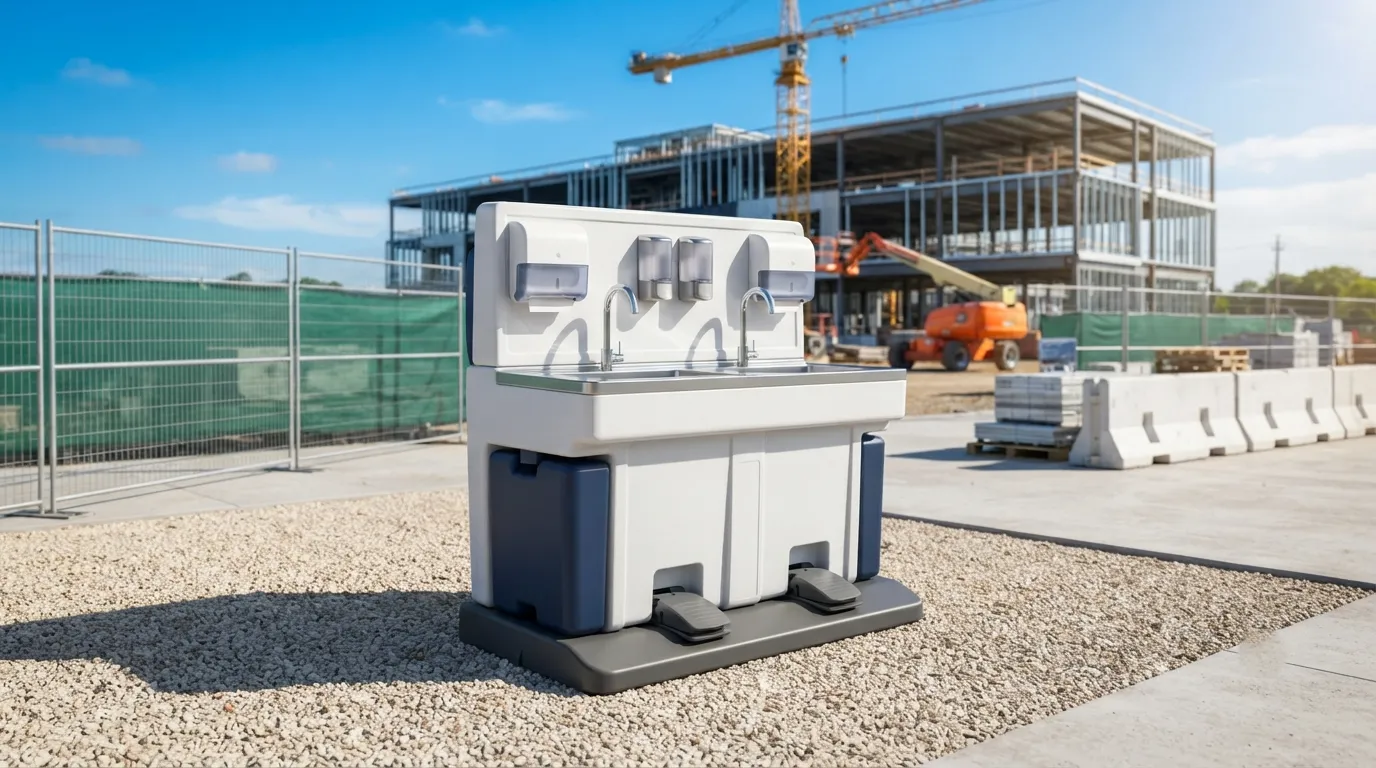
There's no separate headcount ratio for handwashing stations the way there is for toilets, but 29 CFR 1910.141(d)(2) still applies wherever workers wash: soap and a drying method have to be present, every time. A single handwashing station rental unit typically pairs with a cluster of toilets rather than standing alone, especially on sites already running a portable restroom rental package. Crews doing food service, agricultural hand-labor, or paint work should plan for more frequent access points, not fewer. Field sanitation under OSHA 1928.110 sets a walk distance standard for agricultural crews: one facility per 20 employees, reachable within a quarter mile. That's a useful reference even outside farm work, because it captures the real point: stations have to be close enough that people actually use them. West Hartford sites spread across a large footprint, like a multi-building renovation, often need two or three stations positioned near active work zones instead of one at the gate. A portable sink rental placed at a break area covers general washing needs without touching toilet counts.
Do hand sanitizer stations meet the OSHA requirement?
No. Hand sanitizer does not satisfy 29 CFR 1910.141(d)(2), which specifically calls for soap and towels or a hand-drying device. A hand sanitizer station rental is a fine supplement between washes, and plenty of West Hartford job sites keep one at the entrance for visitors and subcontractors. But if an inspector is checking sanitation compliance, sanitizer stations don't substitute for a working sink setup. This distinction trips up a lot of site supervisors who assume any dispenser counts. It doesn't. If your crew is handling anything covered under 1926.51(f)(1), meaning paints, coatings, herbicides or insecticides, a compliant washing setup isn't optional. Pair a real sink unit with your emergency porta potty rental order if a job starts fast and sanitation gear needs to land the same day. West Hartford Porta Pros stocks handwashing units separately from toilets so a site manager can scale each independently as crew size changes week to week.
Where should handwashing stations go on a construction site?
Placement matters more than most planning documents suggest. ADA Standards section 403.5.1 sets a 36 inch minimum clear width for the accessible route leading to any station, and section 405.2 caps ramp slope at 1:12 if the ground isn't level. A stable, firm, slip-resistant surface is required under ADA 302.1, which matters on a West Hartford site with gravel or turf underfoot. Stations belong near the actual work, not tucked behind a fence where nobody will walk the extra distance. That's the same logic behind the porta potty placement guide: distance kills compliance faster than availability does. If a project also needs temporary fence rental around the perimeter, coordinate the fence line so it doesn't block the route to the sink. Sites within 13 to 14 miles of West Hartford, like Bristol at 13.0 miles southwest or Southington at 14.3 miles southwest, get the same placement standards applied on delivery, since ADA routes and slip-resistant surfacing don't change by zip code.
| unit | duration | typical price |
|---|---|---|
| standard toilet | day | $150 |
| standard toilet | week | $200 |
| standard toilet | month | $200 |
| ada unit | day | $230 |
| ada unit | week | $185 |
FAQ
Does a handwashing station need its own permit in West Hartford?
Placement in the public right of way needs confirming with the city before delivery. West Hartford Porta Pros checks this with you during setup planning rather than guessing at a rule. See porta potty permit requirements for the general process, and confirm specifics through request a quote.
Can one handwashing station cover a whole event?
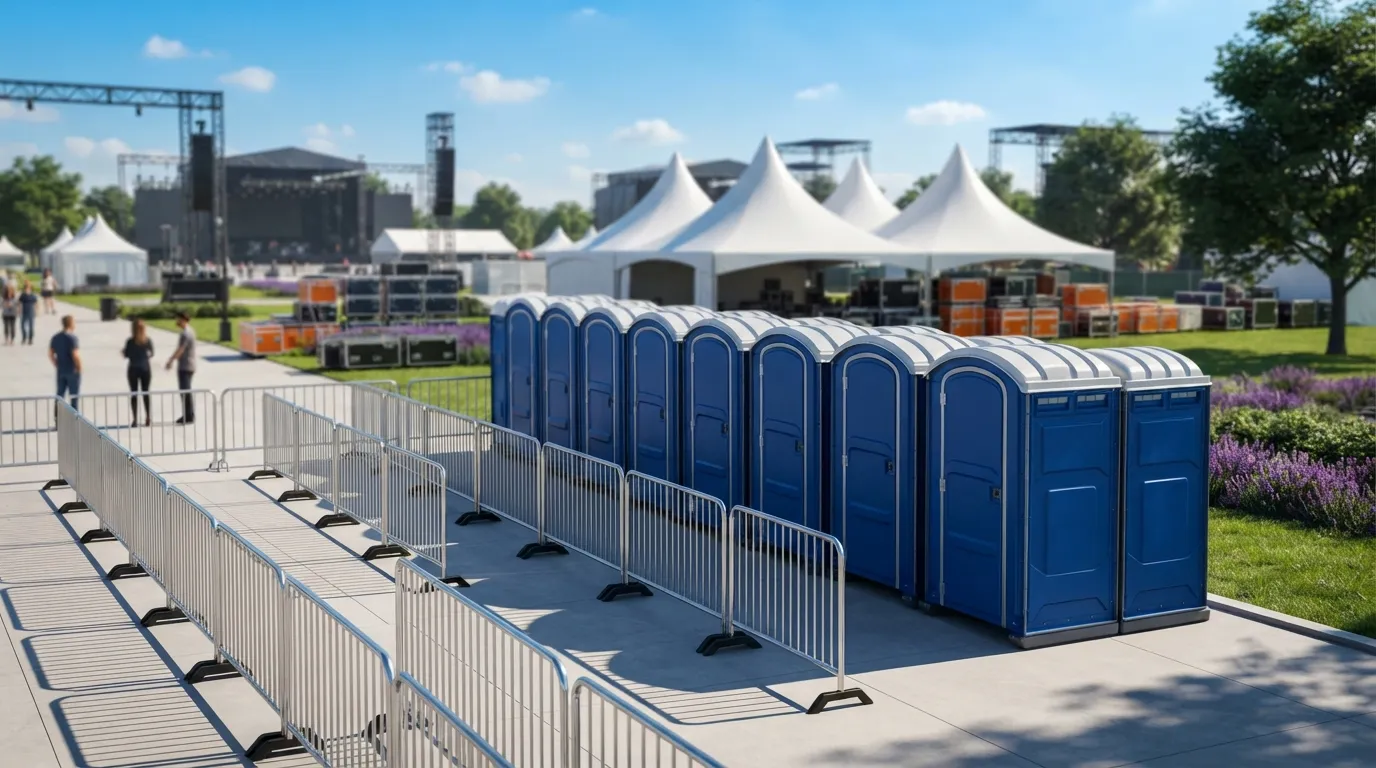
It depends on crowd size and layout. Larger gatherings, like a festival restroom rental setup or a county fair restrooms package, need multiple stations spread across the grounds so nobody walks far to wash up between food handling and restroom use.
What's the difference between a handwashing station and a portable sink?
Not much in practice. Both terms usually describe the same self-contained unit with soap, water and a towel dispenser meeting 29 CFR 1910.141(d)(2). Check portable sink rental for unit specs before ordering.
Do I need handwashing stations if I already have flushable units?
Often yes. A deluxe flushable porta potty has an internal sink, but high-traffic sites still benefit from a standalone station near the work zone so people don't walk back to the trailer every time.
How fast can West Hartford Porta Pros deliver a station?
Same-day delivery is often possible depending on route and stock. Ask about timing when you request a quote, especially if you're also adding an emergency septic service call to the same order.
Next step
Get a delivery date
Tell us the address, the dates and the headcount. We size the order and confirm the route.