How many porta potties does a county fair need?
Start with headcount and hours, then work backward. ANSI/PSAI Z4.3 sets a baseline service interval of one visit per week for up to 10 users over a 40 hour week, which tells you servicing gets heavier fast once a fair runs multi-day with thousands passing through. Our how many porta potties do I need guide walks through the math in more detail, but fairs behave differently than a single work crew. Crowds cluster near the midway, the grandstand, and food vendor alleys, so units spread evenly across the grounds get skipped in favor of ones near the action. We stage extra standard units at those pinch points and add deluxe flushable units near any VIP or sponsor tent. ADA Standards section 213.2 requires that where single-user portable toilets are clustered, at least 5 percent, and never fewer than one unit per cluster, must be wheelchair accessible. That means a bank of six standard units needs an accessible one right beside it, not off in a far corner of the lot. Every accessible unit we place meets ADA Standards section 304.3.1 for a 60 inch turning circle and section 404.2.3 for a 32 inch clear door opening. If your fair runs on a fairground already served by West Hartford Porta Pros in past seasons, we can usually reuse the same staging plan and cut planning time down considerably.
What restroom setup works best for a multi-day fair?
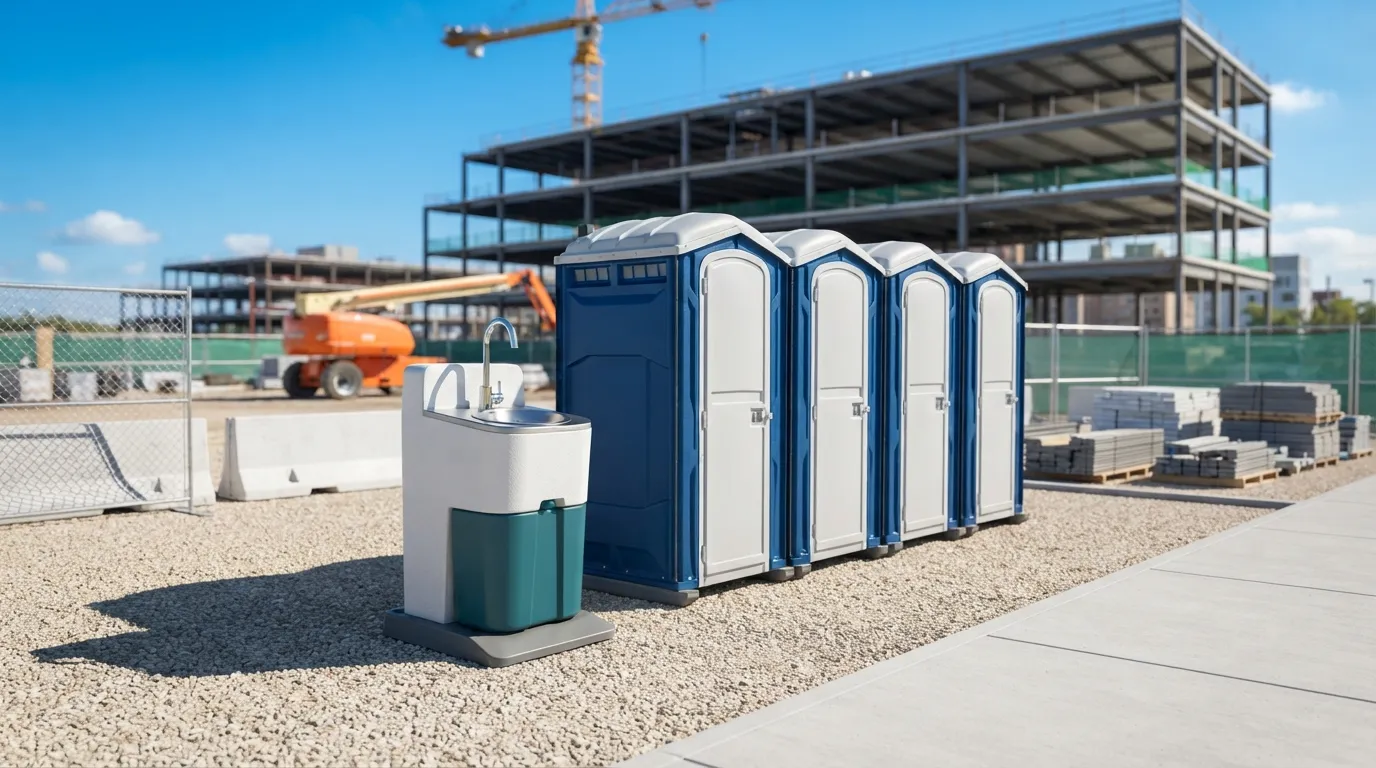
Pair standard toilets for general crowd flow with a restroom trailer if the event has a hospitality tent, sponsor area, or ticketed VIP section. A 4 stall restroom trailer or 8 stall restroom trailer handles higher-end foot traffic without the line pressure a standard unit sees at a food court. Add handwashing stations near every food vendor row; OSHA 1926.51(f)(1) requires washing facilities where workers apply paints, coatings, herbicides, or insecticides, which matters if the fairgrounds crew is doing setup work with those materials before gates open. For general fairgoer use, 29 CFR 1910.141(d)(2) requires soap and towels or a hand-drying device at washing stations, not just sanitizer. We also bring temporary fencing to route lines and keep restroom clusters from blocking walkways, since OSHA 1926.202 requires barricades used for worker protection to conform to ANSI D6.1 specs, a standard we follow even though most of the fence use at a public fair is crowd flow rather than jobsite protection. If the fair includes a working kitchen or concession row generating heavy grease, a grease trap pumping visit partway through the run keeps drains from backing up during peak service hours. West Hartford fairgrounds events near Bristol, roughly 13.0 miles southwest, and Southington, about 14.3 miles southwest, sometimes share vendors and staging crews, so we coordinate delivery windows to avoid truck conflicts on setup day.
Do county fairs need septic or holding tank service too?
Yes, if the fairgrounds site does not have full sewer hookup nearby, and many do not. A holding tank rental or scheduled septic pumping service run keeps restroom trailers functioning through a multi-day event without a mid-fair shutdown. Standard portable units carry a 60 to 70 gallon holding tank, which fills faster than usual once several thousand fairgoers cycle through over a weekend, so we schedule servicing trucks for early morning before gates open and again overnight. OSHA 1926.51(c) sets construction toilet ratios (one seat per 20 workers, scaling up from there), which is not a fairgrounds standard, but it's the baseline we reference when a fair also has a large build crew on-site putting up tents, stages, and vendor booths in the days before doors open. West Hartford setups that also involve equipment storage benefit from a storage container rental for tools and supplies, and a mobile office trailer if fair staff need an on-site command post. For post-fair teardown, a roll-off dumpster sized to the event footprint clears vendor debris fast; see dumpster sizes and dimensions if you're not sure which one fits your load-out timeline.
| unit | duration | typical price |
|---|---|---|
| standard | weekend | $250 |
| standard | event | $400 |
| ada | weekend | $240 |
| trailer | event | $3500 |
Prices above sit inside our measured range across booked jobs; a firm quote depends on unit count and how many days your fair runs. Request a full breakdown through our request a quote page.
How far in advance should I book county fair restrooms?
Book 60 to 90 days out if the fair spans a weekend or longer. Multi-unit fair orders compete with construction and wedding season for the same trucks, and restroom trailers book out first.
Can West Hartford Porta Pros deliver to fairgrounds outside city limits?
Yes. We serve West Hartford directly and reach nearby towns like Glastonbury, about 13.8 miles southeast, and Meriden, roughly 20.1 miles south. Check service areas for full coverage.
Do fairgrounds restrooms need a permit?
Placement rules vary by site, and fairground permit requirements are not something we can state generally. Confirm with the venue and city before finalizing layout; our porta potty permit requirements page explains what to ask about.
How often are fair restrooms cleaned during the event?
Multi-day fairs typically get serviced once or twice daily depending on crowd size, well above the weekly baseline in ANSI/PSAI Z4.3. See how often are porta potties cleaned for the full servicing rundown.
What happens if a unit needs emergency service mid-fair?
We dispatch a service truck same-day. Our emergency porta potty rental line stays open during fair weekends specifically for this kind of call.
Next step
Get a delivery date
Tell us the address, the dates and the headcount. We size the order and confirm the route.